NASA SLI
Huntsville, April 2027
 Cleveland State UniversityRocketry Club
Huntsville, April 2027
The vehicle
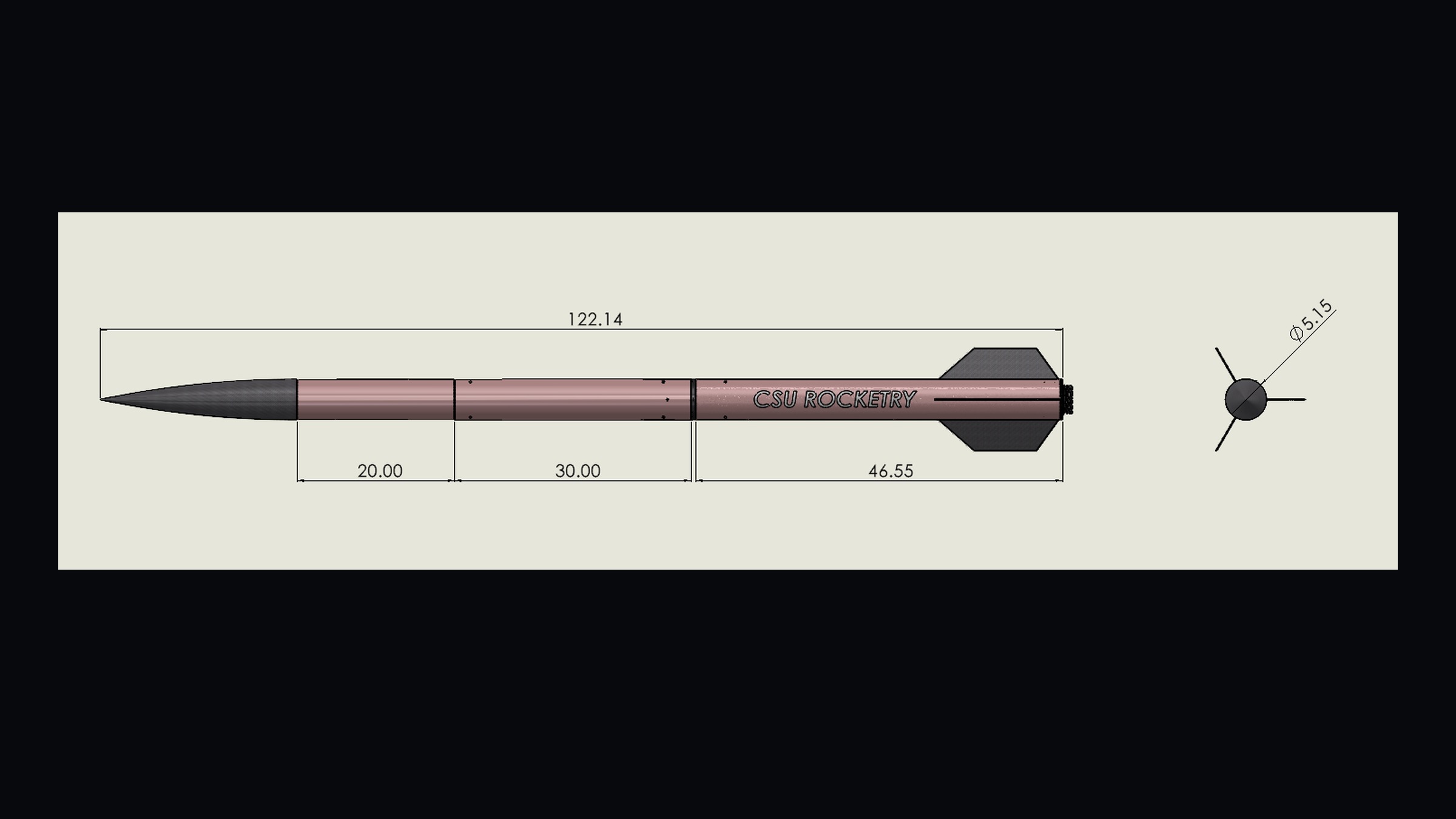
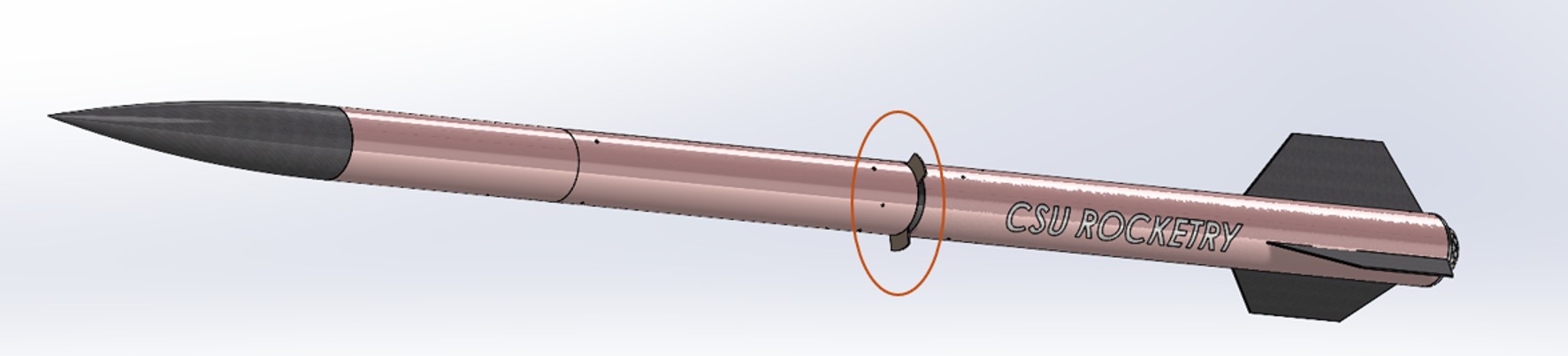
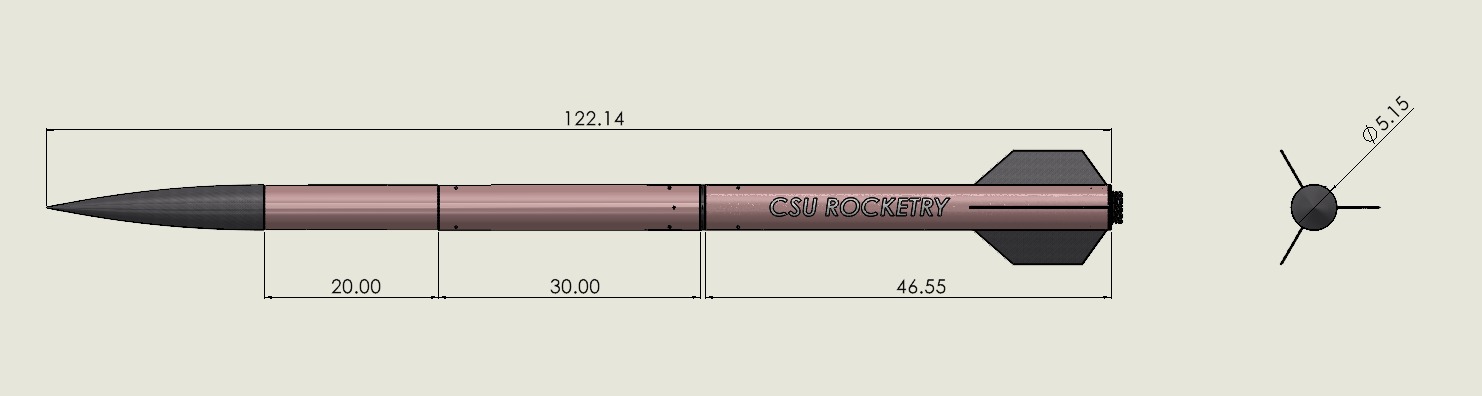
122 inches long. Five inches inside, 5.15 outside. Ogive nose, three carbon-fiber through-the-wall fins, 75-millimeter motor. About 25 pounds before the payload is locked. Dual deploy. Target 4,500 feet.
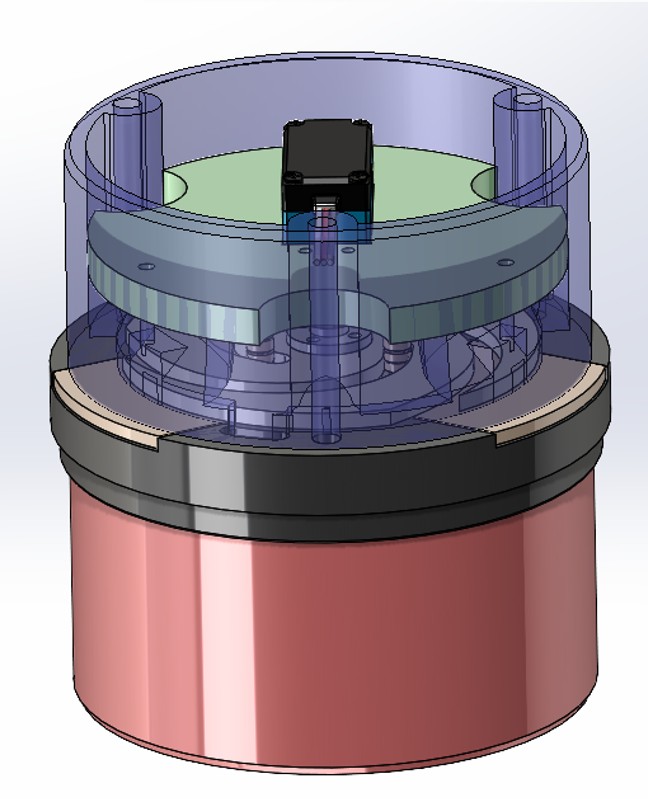
The circle on the airframe is the air brake. Fiberglass carries the loads. Carbon stays on the fins.
Air brakes
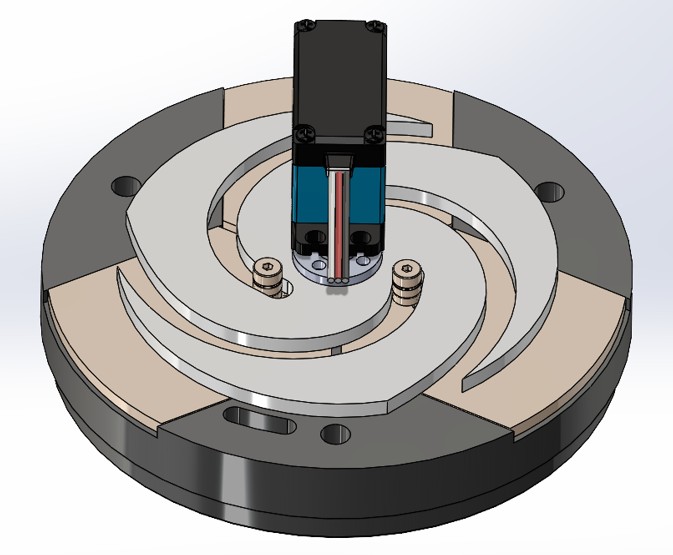
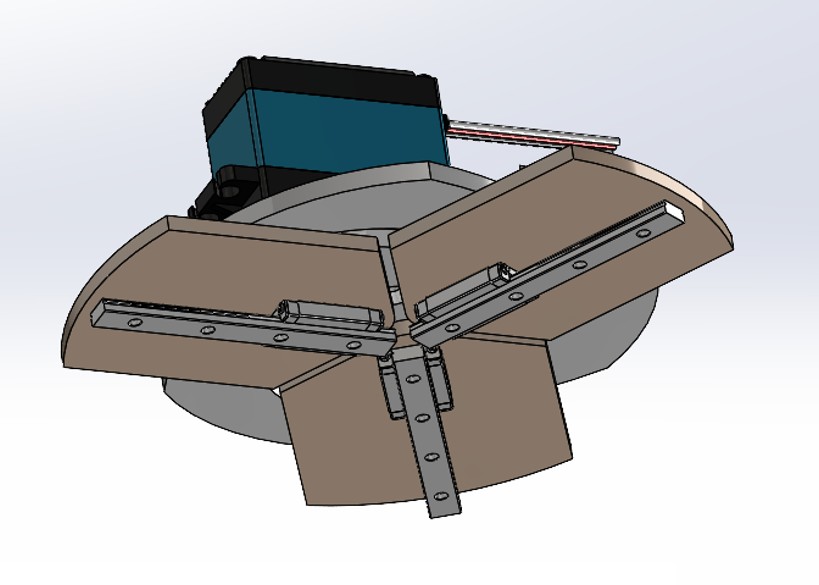
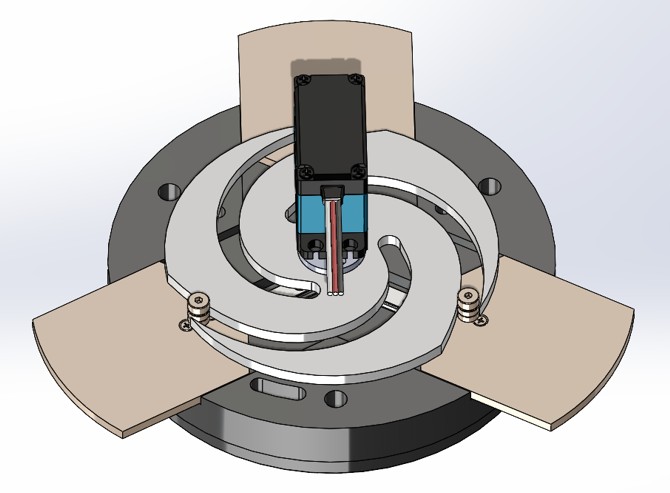
A high-torque servo opens aluminum petals on rails. The controller reads altitude and speed, predicts apogee, and commands extra drag so the vehicle lands on 4,500 feet.
Estimated flight state in, additional Cd out. Bench-tested before it goes in the airframe.
The controller
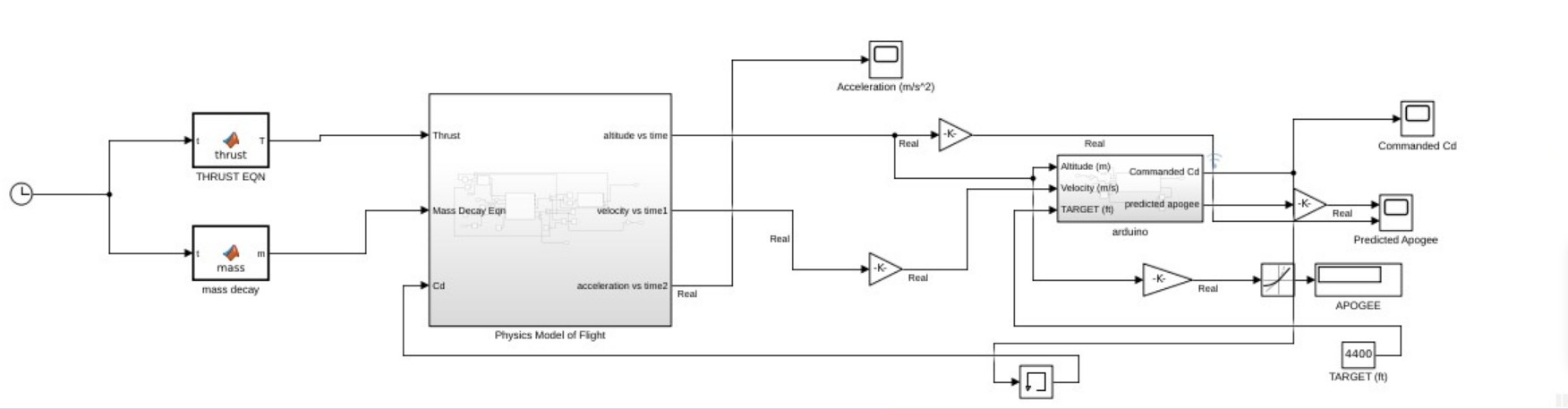
The Simulink model from the proposal. Thrust and mass decay feed a physics model of flight. Inputs are altitude, velocity, Cd, and the 4,500-foot target. Output is commanded Cd and predicted apogee.
Recovery
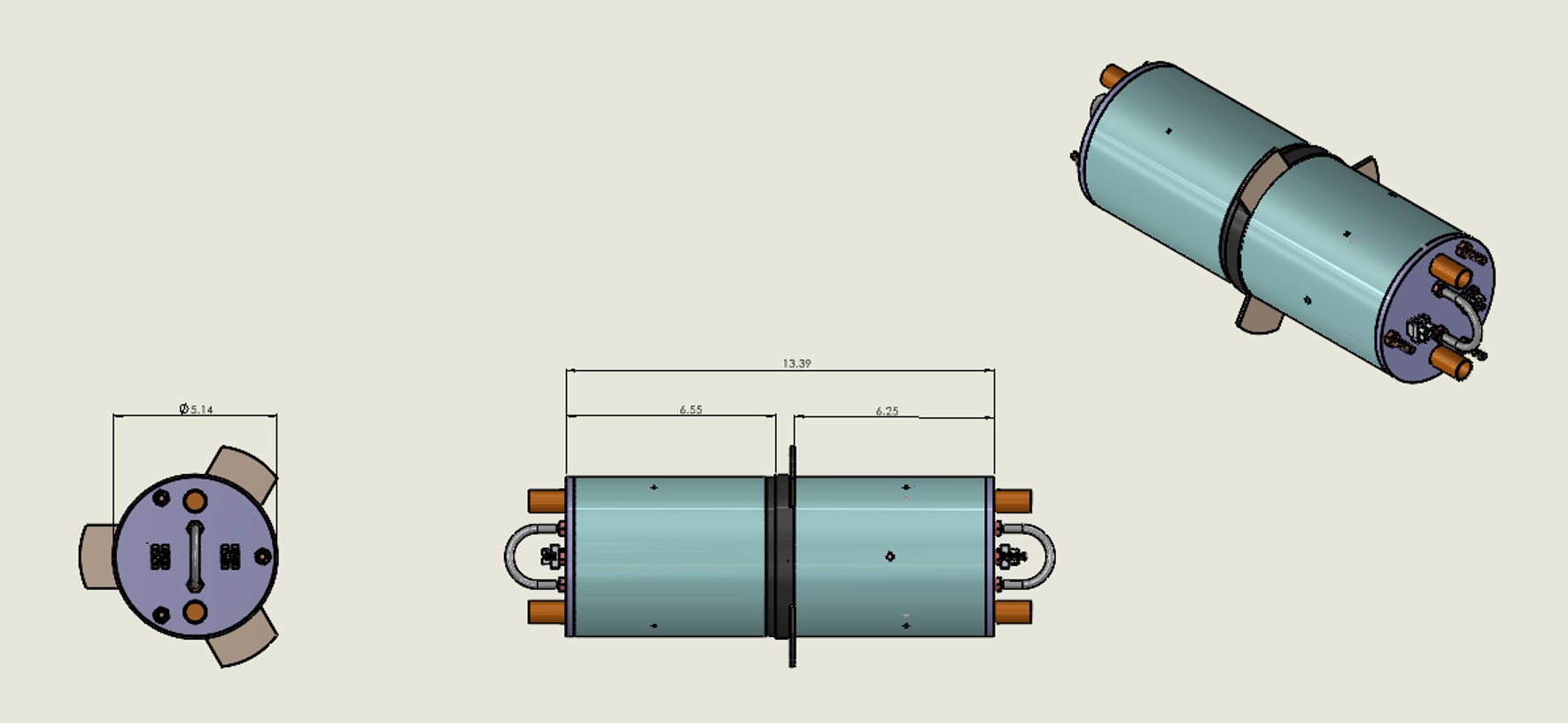
Drogue near apogee. Main at 600 feet. This is the recovery CAD: 5.14 inches across, 13.39 long.
Payload
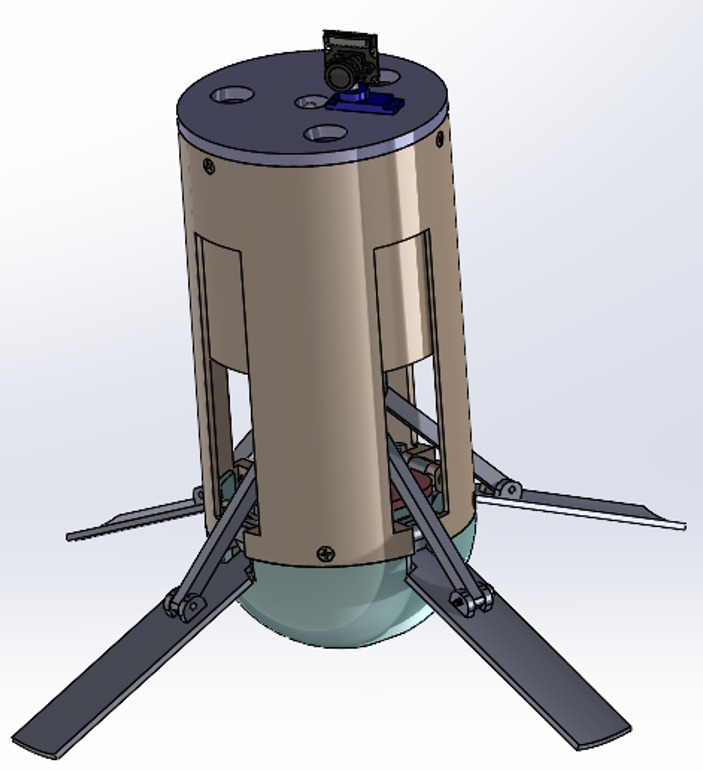
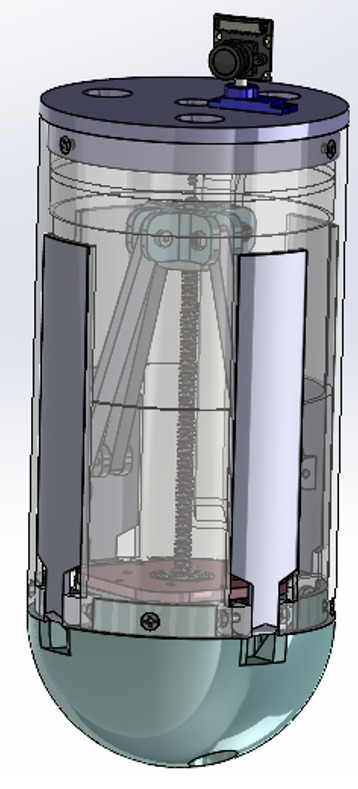
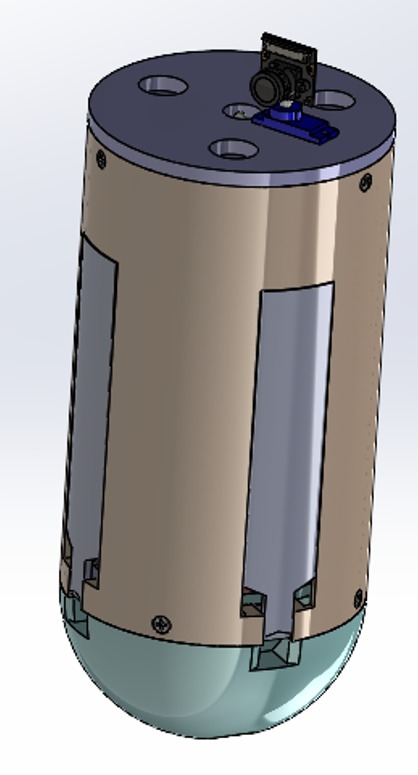
After landing, this cylinder leaves the airframe, stands on its legs, and looks for a target without GPS. Camera on the lid, timestamp, distance. Written to a card.
Weighted nose. Legs on a central screw. Springs hold it in the tube until a burn wire lets it out.
Electronics
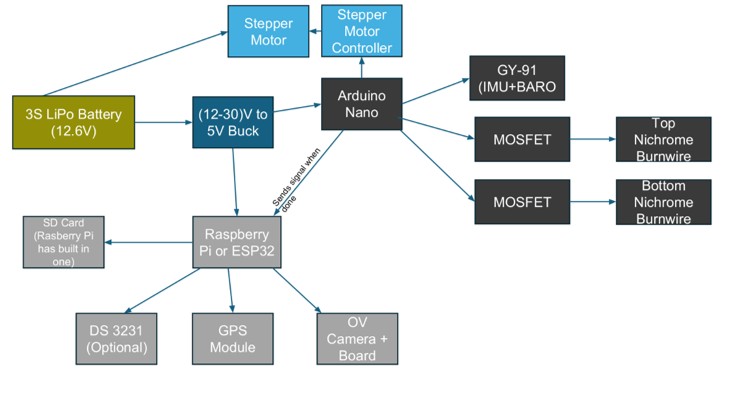
One board flies the camera. One fires the burn wires and the legs. GY-91 for IMU and barometer. Raspberry Pi or ESP32 for the image. Arduino Nano for deployment. 3S LiPo, bucked to 5 volts.
Materials
Vehicle, avionics, recovery, and air brakes. Payload and safety bills are still being written. We ask sponsors for materials. Travel is Cleveland State, or us.